
3 Reasons You Don’t Trust Your Hunger
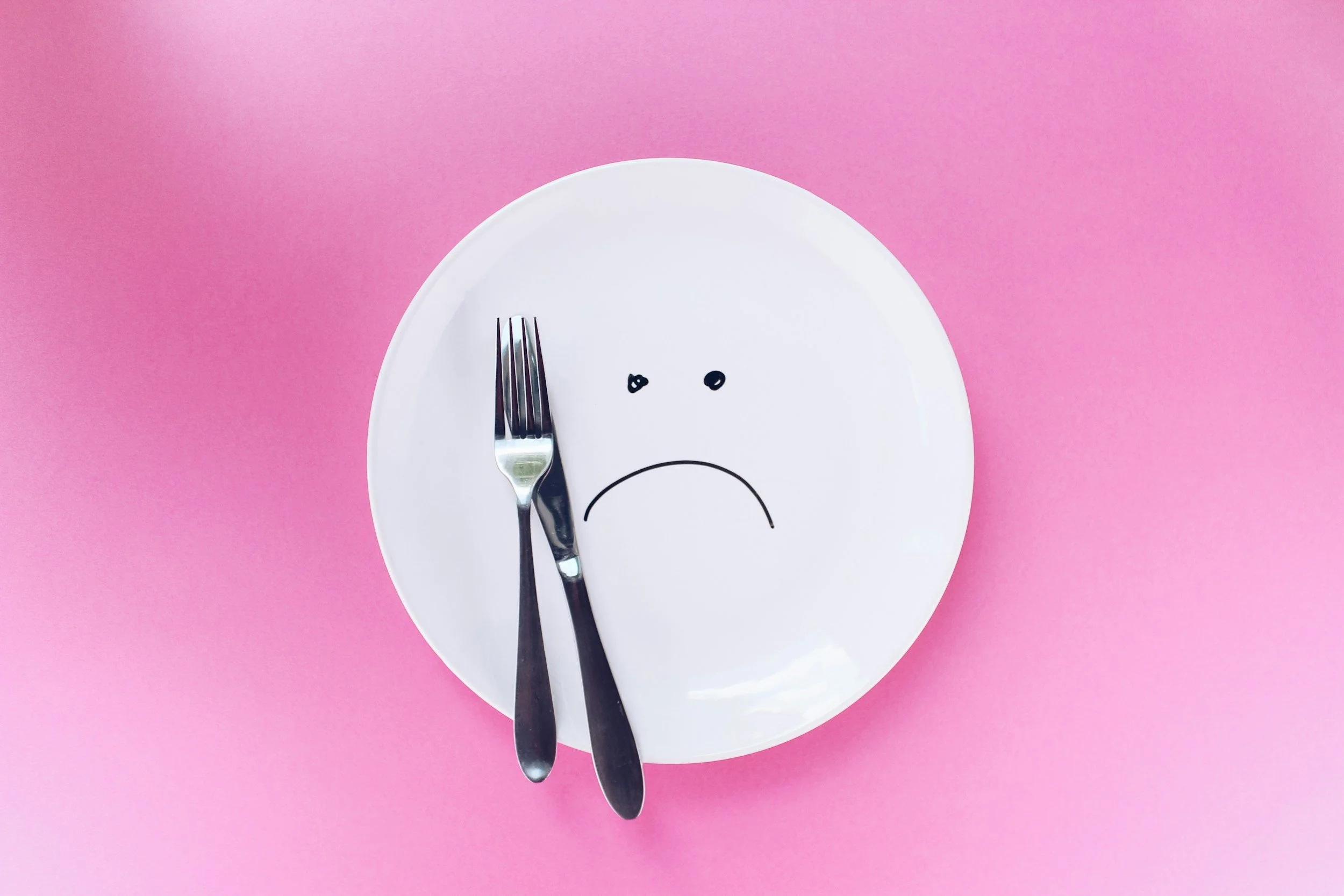
There’s a very specific kind of panic that happens when someone says, “Just listen to your hunger.”
Because in theory? It sounds so simple. Eat when you’re hungry. Stop when you’re full. Trust your body. Very calming Pinterest quote energy. And then real life happens.
Listen to the Episode Now
If this post resonates with you or makes you feel something, share it with a friend! My hope is that we can keep this important conversation going long after the post is over.
You try listening to your hunger, and suddenly you feel like you could eat everything in your kitchen. Or you eat lunch, and you’re hungry again an hour later and immediately start interrogating yourself like you’ve committed some kind of crime. Or you notice everyone else casually existing around food while you’re mentally tracking portions, timing, fullness, whether you’re “allowed” to want more, and whether one extra snack means you’ve officially lost control of your life.
That’s the part people don’t really talk about when it comes to intuitive eating and hunger cues. For a lot of people with disordered eating, hunger does not feel peaceful or trustworthy. It feels chaotic. Loud. Unpredictable. Sometimes, honestly, a little terrifying.
In this episode, I’m breaking down why that happens.
We’re talking about how years of restriction, dieting, food rules, and trying to override your body can completely distort your hunger cues. We’re getting into the fear of “if I start eating, I won’t stop,” why so many people feel like their hunger is excessive or wrong, and why the advice to “just trust your body” can backfire when your body has spent years not being listened to.
I’m also talking about something deeper underneath all of this, which is how hunger is often tied to desire itself. Wanting things. Needing things. Taking up space. For a lot of people, that’s the really uncomfortable part.
And yes, we’re talking about the fear of weight gain too, because pretending that fear doesn’t exist is not helpful to anybody trying to heal their relationship with food.
This episode is practical, honest, and probably going to explain a lot of patterns that have felt confusing or frustrating for years. If you’ve ever felt like your hunger cues are broken or dangerous, listen to the full episode wherever you get your podcasts.
In this episode, I’m talking about:
Why hunger can feel dangerous instead of helpful.
The fear of “if I start eating, I won’t stop.”
How restriction creates chaotic, binge-like eating patterns.
Why intuitive eating can feel terrifying when your body doesn’t trust that food is consistent.
The connection between hunger, control, and fear of weight gain.
Why so many people question whether their hunger is “real”.
How food rules and portion expectations disconnect people from their actual needs.
The way social media and diet culture teach people to override hunger cues.
Why hunger is often tied to deeper fears around desire, needs, and wanting things.
What happens to hunger cues after years of dieting and restriction.
Why “eat when hungry, stop when full” is often too simplistic in recovery.
The importance of meal structure and consistency before relying fully on hunger cues.
Why eating consistently helps reduce urgent, out-of-control eating.
How hunger cues become more subtle and trustworthy over time.
The reality of weight gain fears in eating disorder recovery.
Why pursuing weight loss and healing your relationship with food usually fight against each other.
What set point weight means and how yo-yo dieting affects the body.
How to rebuild trust with your body after years of ignoring hunger.
Why hunger is not a failure, a lack of willpower, or proof that something is wrong.
Quotes
“The fear of, 'If I let myself eat, it's never gonna stop, and I'm just gonna keep being hungry because there is no on or off switch, it's just on,' is rooted a lot of time in past experience. So it sort of reinforces the concept that you should be afraid of your hunger.” - Rachelle Heinemann
“It’s really hard to trust a signal when you think that following it will have consequences that you cannot accept.” - Rachelle Heinemann
“We have to develop accurate hunger cues, and then the trust that you will actually feed it.” - Rachelle Heinemann
“Hunger is not a failure and it’s not dangerous. It’s something that is just a signal.” - Rachelle Heinemann
Frequently Asked Questions
Why do my hunger cues feel so extreme?
A lot of times, hunger cues feel extreme because your body has spent years not trusting that food is consistently coming. If you restrict, delay eating, skip meals, or constantly override hunger, your body eventually stops giving subtle cues and starts screaming. So instead of “slightly hungry,” you go from nothing to starving.
Why do I feel hungry again right after eating?
Sometimes, because the meal genuinely wasn’t enough. Sometimes, because your body is trying to recover from restriction. And sometimes, because hunger doesn’t work on the perfect schedule, people think it should. Hunger is not a stopwatch. Your body does not care that lunch was 45 minutes ago if it still needs energy.
Why does intuitive eating feel chaotic for me?
Because if your body has a history of restriction, “just listen to your hunger” can feel like opening the floodgates. Your body is trying to protect you from famine, not create balance right away. That’s why structure and consistency usually have to come before hunger cues feel calm and reliable.
Can restriction cause binge eating?
Yes. When you repeatedly ignore hunger or don’t eat enough, your body eventually responds with urgency around food. That’s why binge eating often feels chaotic and out of control after periods of restriction. It’s not a lack of willpower. It’s your body trying to keep you alive.
Why am I always thinking about food?
Usually, because your body and brain don’t feel safe around food yet. Restriction increases food thoughts. Hunger increases food thoughts. Constant rules around eating increase food thoughts. Most people are shocked by how much quieter their brain gets once they start eating consistently.
How do I trust my hunger cues again?
Usually not by immediately relying on them. Ironically, trust gets rebuilt through consistency first. Eating regularly, eating enough, and creating structure teach your body that food is not disappearing. Over time, hunger becomes more subtle, clearer, and less urgent.
Will I gain weight if I start listening to my hunger?
Possibly. Sometimes yes. Sometimes no. The bigger issue is that if you are actively terrified of weight gain while trying to heal your relationship with food, those two things usually fight each other the entire time. Recovery often requires putting intentional weight loss on pause long enough to let your body stabilize.
Why does hunger feel emotionally overwhelming?
Because for a lot of people, hunger is tied to desire, need, permission, and taking up space. It’s not just about food. Listening to hunger often means acknowledging wants and needs in general, and that can feel deeply uncomfortable if you’ve spent years minimizing yourself.
Can hunger cues stop working after years of dieting?
Yes. Hunger cues can become really distorted after chronic dieting, restriction, or disordered eating. Some people barely feel hunger until they’re ravenous. Others feel hungry all the time. That doesn’t mean your body is broken. It usually means your body has adapted to inconsistency.
Why can’t I stop eating once I start?
A lot of people think this means they’re addicted to food or lack discipline. Usually, it means they’re underfed. When your body thinks food is scarce, it’s not interested in moderation. It’s interested in survival.
Should I eat even if I’m not hungry in recovery?
A lot of times, yes. Especially early on. If your hunger cues are unreliable, waiting until you feel hungry enough can keep you stuck in the restriction and binge cycle. Structure helps rebuild stability before hunger cues become more trustworthy.
What does normal hunger actually feel like?
Usually a lot less dramatic than people expect. Over time, hunger becomes softer, earlier, and more informational. It stops feeling like an emergency and starts feeling like a cue.
Resources
Brave on Purpose! - Grab my new book here!
Looking for a speaker for an upcoming event? Let’s chat!
Now accepting new clients! Find out if we're a good fit!
The 6 Week Body Image Group is a small, Zoom-based group for women where we actually talk about this — the thoughts, the patterns, the why. Each week, dietitian Sydney Greene and I, (therapist Rachelle Heinemann) hold an open, honest conversation about what it feels like to live in a body and how to build a genuinely different relationship with it. Not a diet. Not a fix. Just real work, with the right people, in a room that gets it.
Details:Wednesdays, 7 PM EST | $100/session | Superbills available | Starts early June
Email sydney@sydneygreenehealth.com to save your spot.
Related Episodes
Episode 195. 3 Internal Conflicts Every Eating Disorder Manages
Episode 193. 4 Things We Mean When We Say “Let Go of Control” (And 1 Thing We Don’t)
Episode 192. The 5 Non-Negotiables of Eating Disorder Recovery
Newsletter update: If you’re not already signed up for my newsletter, then I’m not sure what you’re waiting for! I’m ✨obsessed ✨ with it. In an effort to keep things fun and fresh, we’re going to monthly newsletters rather than weekly. If you have any feedback on what you want to see in the newsletters, reply back to one or send me a message!
Grab my FREEBIE!: As you navigate recovery, you may be feeling like something is missing. You're doing a lot of work challenging yourself with the food, your body, and exercise. You're probably working on lots of other things at the same time, like stuff at work or relationship issues.
But, still, something doesn't feel like you're getting to the bottom of it. Grab my free journal prompts below and begin to work through the emotions of healing.

More From Rachelle
Hey there! I’m Rachelle, the host of the Understanding Disordered Eating Podcast. As a Licensed Mental Health Counselor, I work with clients to make sense of life’s messy emotional experiences.
I believe in the power of deep work and its positive impact on your life in the long term. Learn more about how we can work together here.
Sign up for my weekly newsletter for even more!
You can connect with me on Instagram, through my website or email me directly clicking the links below.
Subscribe & Leave A Review!
If you enjoyed this episode, you can show your support by leaving a review, subscribing, or sharing with someone who may need help. Click here to open this show in iTunes and leave a five star rating and review.