

WELCOME TO THE PODCAST
Understanding Disordered Eating

LISTEN NOW
Understanding
Disordered Eating Podcast
Each week we explore the deeper meaning of our relationship with food and our body. I interview experts in the field of eating disorders and psychoanalysis to bring you the answers about why you do the things you do and bring you one step closer to a healthier relationship with food and yourself.

Ozempic, Wegovy, & Mounjaro with Laura Cipullo
There’s a sea of misinformation out there because medications like Ozempic, Wegovy, and Mounjaro have become so popular. But the real question is why? These aren’t necessarily brand-new medications but lately, we’ve seen them “prescribed” right and left and it leaves us wondering if it’s something we should consider.
The Comparison Trap and Eating Disorders
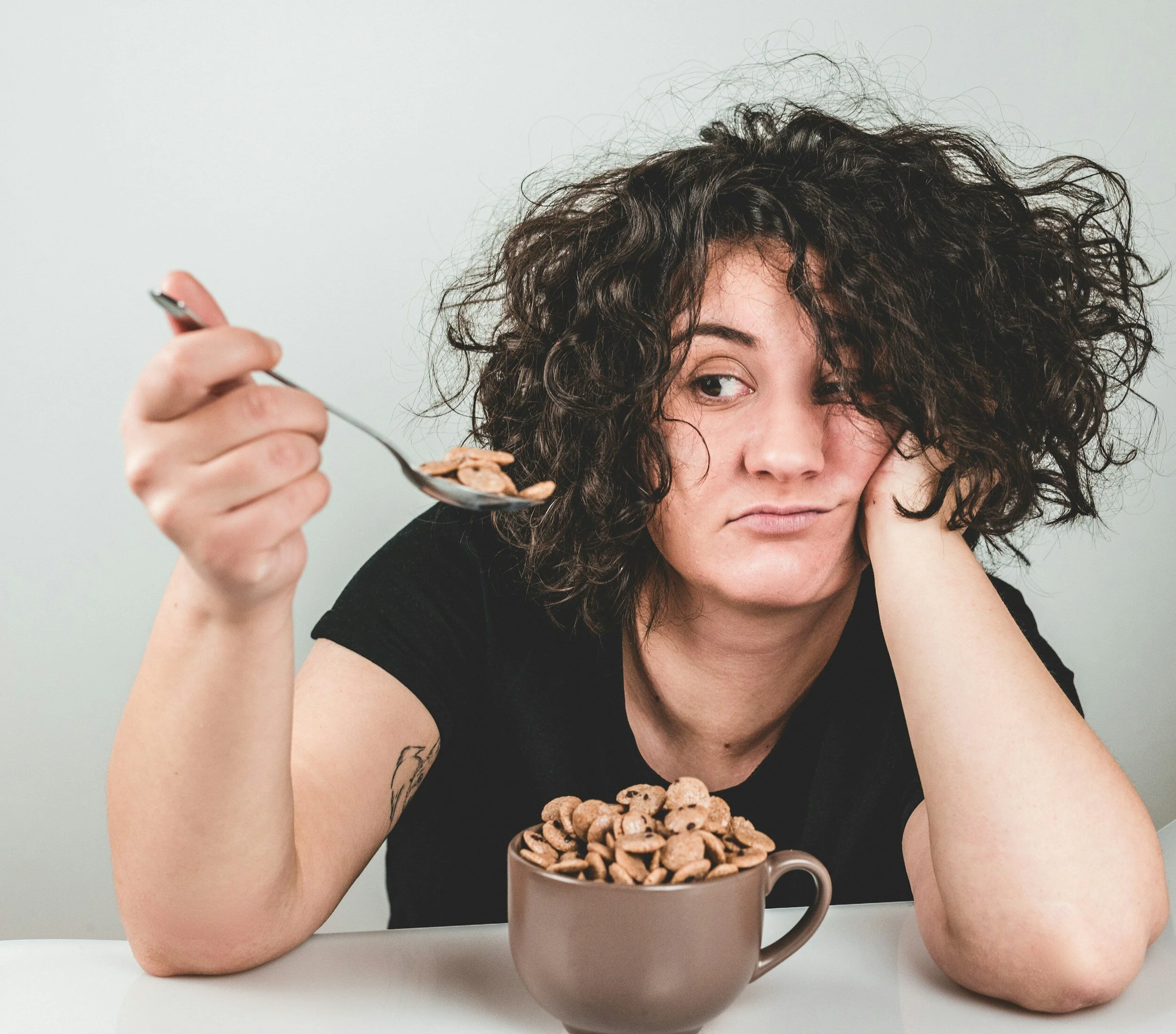
But here’s the thing: they are two completely different lifestyles. Both people are in different phases of their lives with perhaps significant differences in resources and personalities (and lots of other things) and are not in a place to compare one another. This is the comparison trap that oftentimes it has an unintended impact on one’s relationship with food and self-esteem.

Disordered Eating VS Eating Disorder, Which Is It?
Do labels like "disordered eating" and "eating disorder" truly serve us, or do they limit our understanding of individuals and their unique journeys with food? These labels are often misunderstood, which makes it feel like such a hard concept for our peers to grasp. As an outsider, who is curious about your own relationship with food or wants to support someone navigating theirs, knowing the difference in these labels can be beneficial.

Eating Disorders Don’t Have a Look
Here’s the thing, eating disorders don’t have a look. It’s a myth that eating disorders are typically portrayed by a “skinny” individual. But the reality is far from that stereotype. Eating disorders can affect anyone, regardless of their outward appearance. They don't discriminate based on size, shape, or weight.

Navigating Parenthood and Eating Disorders with Dina Cohen, MS, RDN, CEDS-C
The unconditional love we have for our families can be incredibly healing, especially for those who have struggled with eating disorders. Parenthood, with its inherent love and acceptance, can serve as a powerful motivator for recovery. Yet, as much as we cherish these moments, we also recognize the challenges they bring, particularly for individuals with eating disorders.

Weight Loss, Yay or Nay?
We should be exploring questions around the perception that excessive weight is a health problem, the dangers of intentional weight loss, and the conversations that uncover this controversial topic.

Bariatric Surgery and Eating Disorders with Dr. Marianne Miller
Just last year, The American Academy of Pediatrics put out (terrible) guidelines, that in a nutshell, give the “go-ahead” to evaluate children for weight loss medication and/or surgery. Weight loss surgery is completely irreversible. So why is it being recommended? There are many challenges that individuals will face when deciding to undergo weight loss surgery. Not only the painful physical challenges but the mental and emotional ones as well.

How To Recover When Everyone Around You Is Dieting
Everyone seems to have an opinion, you've probably encountered unsolicited advice and opinions from well-meaning (or not-so-well-meaning) friends or family. But here's the thing – You are not on a mission to help them see the world the way that you do. You are not on a mission to help them understand intuitive eating and eating disorder recovery.

What Every Therapist Wished Psychiatrists Knew About Eating Disorders
When we view mental illnesses as medical illnesses, we are going to miss the nuance that is associated with emotions and psychology. There is no official proven line of treatment (I mean meds here) for eating disorders. But typically the individual also has some version of insert mental illness here and meds could be really helpful.

Highly Sensitive People and Eating Disorders
Someone who is more prone to feeling intolerable emotions is generally more prone to lean into any sort of eating disorder behaviors, substance abuse, or unhealthy coping mechanisms. The feelings they feel are so big and so intolerable, no wonder they’ll want relief from the pain.
So I think the biggest question here is: if you are a person who is highly sensitive, how do you deal with intense emotions?

Medical Assistance In Dying and Eating Disorders with Dr. Anita Federici
But the question is, why is this a controversial topic? MAID is not a new construct. It has been utilized around the world with different controversies for many years as a way of ethically, compassionately, and humanely allowing people to have a dignified way of dying. In modern-day science or modern psychology, we don’t have a way to alleviate the suffering of someone who is battling a severe mental health condition. While I acknowledge that different medications serve their purposes, the question remains: why is there a difference between “mental illnesses” and “physical illnesses”? Is there even a difference?

How To Eat When You Don’t Feel Like It
I'm sure many of you have experienced this, especially after spending time with family during the holidays. Whether it's a recent struggle or an ongoing issue, the key question is why you don't want to eat. Yes, it might sound cliché, and you probably saw it coming from me, but it's crucial because your answer guides the approach.

Body Positivity is a Farce
What comes to mind when you hear the term “body positivity”? First off, it’s become a mainstream concept. Body neutrality, all foods fit, and body positivity are all terms to describe a phase of coming to terms with your body. However, we have to recognize that this approach may not resonate with everyone seeking help. While we shift towards inclusivity, we also inadvertently exclude individuals who may not be ready or comfortable with these concepts. These individuals hear these terms and think “Nope, I want nothing to do with this” and run from treatment.

Orthodox Jews and ED with Devorah Levinson
There is a cultural shift within the Orthodox Jewish community due to the internet, where appearance ideals have become pervasive, challenging the community's perceived protective measures. The learning curve lies in recognizing these changes and understanding that even with a more insular lifestyle, the community is not immune to the impact of societal influences on body image and eating habits.

The 1 Thing That Affects Every Single Person with an ED
When someone firmly establishes a boundary, that’s part of what we’d call being assertive. These qualities go hand in hand. For a lot of folks, it’s the hardest thing to do and we practice doing so in recovery. In contrast, there are totally those who don’t have a problem with voicing their opinions and clearly stating their boundaries but it can come across as pretty aggressive. I don’t consider the “aggressive” way of interacting assertive. In fact, it’s the other side of the same issue as not speaking up enough. That’s why I say 100% of people struggle with assertiveness because it comes from one side or another.

The Rules of the Therapy Game with Dr. Dana Satir, CEDS
Let’s first acknowledge that there is no fixed framework for the therapeutic relationship. We know that each person's experience is unique. How close we get to the edges of this metaphorical frame varies from person to person and might change over time. But ultimately, most sessions follow a set of “rules”.

Ultra Processed Food, Food Addiction and Eating Disorders with Dr. David Wiss
David and I have a conversation no one is having in the eating disorder world. To be clear, no one is having because of the protective feelings we have about the ED community and how we understand it to be most helpful to those who are struggling. Me included. I do know that for a lot of ED clinicians, concerns about backlash and fear of being canceled have prevented more open dialogue about the complicated nature of different types of foods.
*If you currently have an active eating disorder and have a lot of rules in your mind, this post may be best for you to read later until you have fewer rules in your mind*
Learn more about eating disorder therapy and treatment in NYC and Brooklyn with Rachelle Heinemann at rachelleheinemann.com.

Secrets and Eating Disorders with Dr. Kathryn Zerbe
Why do people keep secrets?!
The ability to keep secrets is actually a developmental milestone. As humans, we need a sense of our own mind; we all need a sense of privacy. When a child starts to have more of a sense of self, their capacity to keep secrets increases. Secrets are not inherently bad; it is quite a milestone.
The problem becomes when secret keeping is not solely for the purpose of having a bit of space to ourselves. When it becomes obvious to a kid that something bad is happening and they get implicit (or explicit) messages to keep things quiet. When it becomes clear to a child that sharing more of themselves is not welcome. Or, when a teen needs to assert themselves so loudly in order to let others know they’ve individuated when they feel smothered.
Learn more about eating disorder therapy and treatment in NYC and Brooklyn with Rachelle Heinemann at rachelleheinemann.com.

Red flags and Warning Signs
It’s hard to determine whether a loved one is suffering from an eating disorder or not. The good thing is, that there are signs that you can look out for that can help you know when to start a conversation. In this episode, I talk about red flags and warning signs. If you see someone you love who might be experiencing any of these, you can go way back to episode 9 about what the heck to do. Spoiler: unconditional support and love go a long way.

5 Tips for After a Binge
I know that I talk quite a bit about the deeper meaning of different eating disorder symptoms and behaviors. But sometimes, especially right after a binge, what you need is tips to help in the moment. In this episode I share 5 tips to keep in mind after a binge.
That obviously doesn’t mean that we forget about the function of the binge. The binge is there for a reason. It is there to help us manage really difficult emotional experiences. Chances are, if you are still bingeing, it’s actually doing so effectively. Except that now the binges have become their own problem. So now you got the underlying stuff and the binge itself. If you’re not yet in a place to try to understand the function of your binges, or if you’ve just binged and don’t feel like thinking about anything else, be sure to listen to the end to get all 5 tips.

Meet Your Host
Rachelle is a licensed mental health counselor, eating disorder and analytic therapist.
Rachelle works with clients in New York City and Brooklyn to make sense of life’s messy emotional experiences.